Los Angeles drivers are no strangers to close calls on the road. Whether you are navigating the bumper-to-bumper morning rush on the I-405, merging onto the high-speed lanes of the 101, or driving through busy intersections in Downtown, a sudden collision can change everything. Airbags are engineered to be your last line of defense—but exactly what speed triggers them, and how does their deployment affect your injury case?
If the impact was violent enough to set off your vehicle’s safety sensors, you are likely dealing with both severe injuries and a heavily damaged car. This is when navigating the legal aftermath can get complex. If you were hurt in a crash on a gridlocked freeway or a busy intersection, our Los Angeles car accident lawyers offer free consultations to help you navigate your claim.
Crash Sensors and Safety: How Airbags Deploy in a Los Angeles Wreck

Airbags are built to protect you in serious crashes, not minor bumps. The moment a collision begins, sensors measure how severe the impact is. If it’s strong enough, they trigger the inflators to fill the bags with gas in a fraction of a second.
In most cars, airbags deploy between 10 and 16 mph when hitting a solid object, though it may take more force if the crash involves another moving vehicle.
Modern vehicles also use more than just one type of airbag. Depending on the type of crash, different airbags may deploy to protect you and your passengers. For example:
- Frontal airbags protect in head-on or near-frontal collisions.
- Side airbags deploy in T-bone or broadside impacts.
- Curtain airbags drop down in rollovers or side crashes.
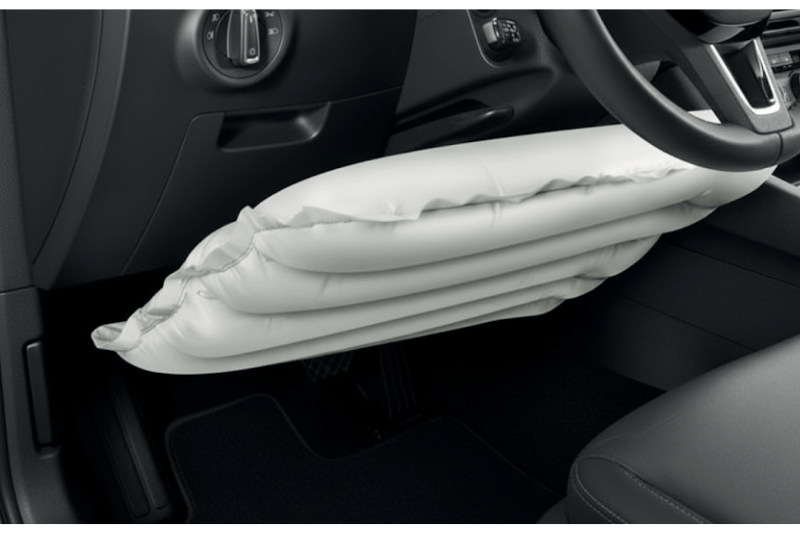
- Knee airbags (in some cars) shield your lower body from hitting the dashboard.
Because each type of airbag has its own sensors and thresholds, the speed at which airbags deploy depends not only on the type of crash but also on the system designed by the car’s manufacturer.
Every automaker sets its own safety and deployment standards, which is why airbags may respond differently from one vehicle to another.
Recommended Reading: What to Do After a Car Wreck in Los Angeles
Frontal Airbag Deployment Speed Thresholds
Frontal airbags are the most common type of airbag and have been required in all cars, light trucks, and vans since 1999. They are designed to inflate in moderate-to-severe crashes to keep your head and chest from hitting the steering wheel, dashboard, or other hard surfaces.
For unbelted occupants, frontal airbags often deploy at speeds as low as 10–12 mph in a direct impact. For drivers wearing seatbelts, the threshold is usually higher, around 16 mph, since a seat belt protects at lower speeds.
This can explain why airbags can deploy in one accident but stay inactive in another, even when the speeds seem the same. For example:
- If you slam into a tree at 15 mph without wearing a seatbelt, your airbag will most likely deploy.
- If another car clips your bumper at the same speed while you’re belted in, the system may not trigger because the belts can absorb much of the force.
Even when they save lives, airbags can still cause injuries such as bruises, burns, or wrist fractures. If your airbags deployed in a crash, it’s important to seek medical care and speak with a lawyer about your rights.
Recommended Reading: Catastrophic Injuries From High-Speed Car Accidents
Side Airbag Deployment in LA Broadside Crashes
Side airbags are critical in T-bone or broadside crashes, which are especially dangerous because there’s little space between you and the impact. These airbags deploy faster than frontal ones, usually within the first 10–20 milliseconds of a crash.
The exact speed matters:
- In narrow-object crashes, such as hitting a pole or tree, side airbags may deploy at speeds as low as 8 mph.
- In wider impacts, like another vehicle striking your door, deployment often occurs around 18 mph.
Head- and chest-protecting side airbags can mean the difference between a survivable injury and a life-threatening one. They cushion your body and spread out the impact, helping to prevent broken ribs, head trauma, or worse.
These protections can be especially important on busy Los Angeles roadways and high-collision corridors where side-impact crashes frequently occur, including portions of the I-405 (San Diego Freeway), I-10 (Santa Monica Freeway), and US-101 (Hollywood Freeway).
Recommended Reading: Frontal Airbag vs. Side Airbag Deployment: Different Injuries, Different Claims
Side Curtain Airbags in Los Angeles Rollover Accidents
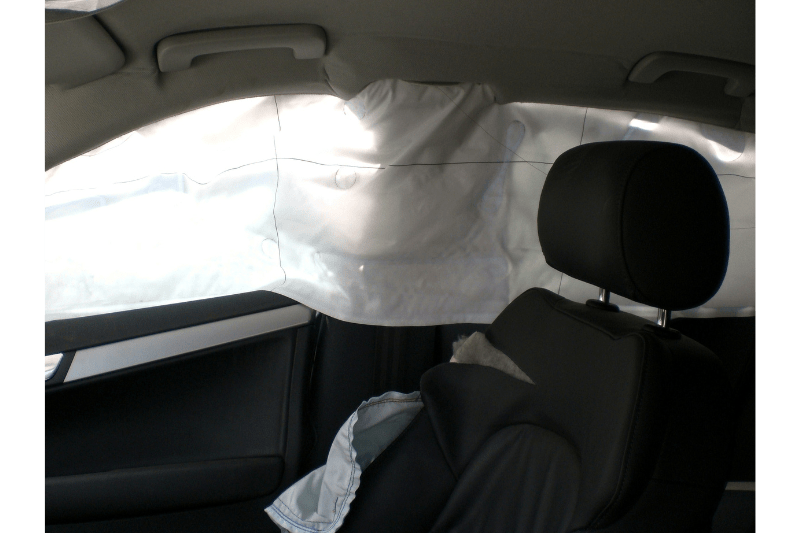
Rollover crashes are among the most violent accidents on Los Angeles roads. To reduce injuries, many cars now include side curtain airbags that deploy during rollovers.
These airbags work differently: sensors detect the car’s sideways movement and tilting. Once a rollover is likely, the airbags deploy quickly, within 10–20 milliseconds, and stay inflated for much longer than other airbags, sometimes 10 seconds or more.
This prolonged protection is vital in multiple-roll crashes, keeping heads and upper bodies from slamming against windows and even helping prevent ejection.
Knee Airbag Deployment and Lower Body Trauma
Knee airbags are not as common, but they add an important layer of protection in frontal crashes. Usually located beneath the steering wheel or glove box, they deploy to stop the driver’s or passenger’s knees and legs from hitting hard surfaces.
By spreading out impact forces, knee airbags don’t just protect the lower body. They can also reduce stress on the chest and abdomen by controlling the movement of the lower body during a crash.
This helps prevent broken bones, ligament injuries, and deep bruises. While not every car has them, knee airbags can play a crucial role in reducing the severity of injuries in a serious crash.
Recommended Reading: Airbag Deployment in Low-Speed Accidents: When Minor Crashes Cause Major Injuries
Can You Drive After Airbags Have Deployed?
Once an airbag deploys, it can’t be reused. Driving without working airbags isn’t just unsafe; it may also be illegal, since your car no longer meets safety standards.
Airbags don’t require regular maintenance, but after a crash, they must be replaced at a certified repair shop using original equipment manufacturer (OEM) parts. This ensures the new airbag isn’t counterfeit, since fake airbags can fail to deploy or even release sharp metal fragments
Because replacement is so costly, many insurance companies declare the vehicle a “total loss” after airbag deployment. Instead of worrying about the car, make your health and recovery the top priority. Let a Los Angeles car crash lawyer handle the insurance battle while you focus on healing.
Free case review
Your injury may be worth more than you think.
Symptoms that appear days or weeks after a crash are common — and compensable. Our Los Angeles car accident lawyers can review your case for free.
Get a free case review → (213) 985-1120- Recommended Reading
- How Airbag Deployment Affects Your Car’s Value and Insurance Claims
When Is It Safer to Turn an Airbag Off?
Airbags are designed to save lives, and in most cases, keeping them active is the safest choice. However, there are rare situations where the risks of a frontal airbag outweigh the benefits.
In these cases, the National Highway Traffic Safety Administration (NHTSA) can authorize an ON-OFF switch for the airbag. You may qualify for an ON-OFF switch if:
- A rear-facing infant seat must be placed in the front because there is no back seat, or the back seat is too small. (Passenger airbag only)
- A child under 13 needs to ride in the front due to a medical condition requiring constant monitoring. (Passenger airbag only)
- A driver or passenger has a medical condition that makes the airbag unsafe. This usually requires a doctor’s statement. (Driver or passenger airbag)
- A driver must sit very close to the steering wheel because of small stature (around 4’6” or shorter). (Driver airbag only)
If an ON-OFF switch isn’t available for your vehicle, NHTSA may allow permanent deactivation of the airbag. However, this process is stricter since once deactivated, the airbag cannot easily be turned back on for drivers or passengers who may need it.
How a Los Angeles Car Accident Lawyer Uses Airbag Data to Prove Your Injuries
When airbags deploy, it’s proof that your crash was severe. Insurance companies know this, but they may still downplay your injuries to protect their bottom line. Airbags themselves can also cause harm, including burns, eye damage, or fractures.
That’s why quick medical treatment and strong legal guidance are so important.
Our experienced car accident lawyer in Los Angeles can use airbag deployment as powerful evidence in your claim. We can:
- We immediately deploy accident reconstruction experts to secure your vehicle’s Electronic Control Module (ECM) data to prove the precise speed and force of the impact.
- Our team pulls official crash reports from local agencies such as the LAPD and the California Highway Patrol to align officer narratives with physical vehicle damage.
- We use the undeniable physical proof of airbag deployment to counter insurance adjusters who try to claim your injuries are exaggerated or from a low-speed “fender bender.
- We aggressively pursue maximum recovery for your medical expenses, lost income, long-term rehabilitation, and the pain and suffering caused by a violent collision.
California follows a comparative negligence system, which means an injured person may still recover compensation even if they were partially responsible for the accident. In many Los Angeles car accident cases, evidence such as airbag deployment data, LAPD or CHP crash reports, and vehicle damage can play a critical role in determining liability and damages.
With decades of experience, our firm has helped thousands of Los Angeles accident victims get the justice and recovery they deserve.
Recommended Reading: Chemical Burns from Airbag Deployment; Medical Treatment and Legal Options
Get Legal Help From Our Los Angeles Car Accident Lawyers Today

Airbag deployment is proof that your crash was serious, and so are the injuries that often come with it. Protecting your health and your future starts with the right legal team by your side.
Our Los Angeles car accident attorneys have decades of experience, recovering millions for injured clients across the state. We know how to take on insurance companies, prove the true impact of your injuries, and fight for the full compensation you deserve.
If you were injured in a car accident anywhere in Los Angeles County — from Downtown Los Angeles and East Los Angeles to the San Fernando Valley, South Bay, and Long Beach — our legal team is available to review your case and explain your options. Visit our Los Angeles office page or contact us today for a free consultation.
Call today to schedule your free case review, or fill out the form below. There are no upfront costs, and you won’t pay a dime unless we win for you.