
You’re stopped at a light when another car taps you from behind. The damage looks small, and at first, you feel fine. But then the airbag deploys, and by the next day, your body tells a different story.
When things don’t feel as minor as they first seemed, it’s important to understand why. Knowing how these types of crashes affect your body can help you take the right next steps.
Quick Answer: Can a Low-Speed Crash With Airbag Deployment Cause Injuries?
Yes. Even in a low-speed accident, the force of sudden movement and airbag deployment can place stress on your body. Injuries may not appear right away, but symptoms can develop hours or days later.
If you’re already dealing with symptoms after a crash, getting clear information early can make a difference. A quick conversation with a personal injury attorney can help you better understand what to pay attention to moving forward.
Why a “Minor” Crash Can Still Cause Real Injuries
A crash doesn’t have to happen at high speed to affect your body. Even in stop-and-go traffic or parking lot accidents, the force of impact may be enough to cause an injury.
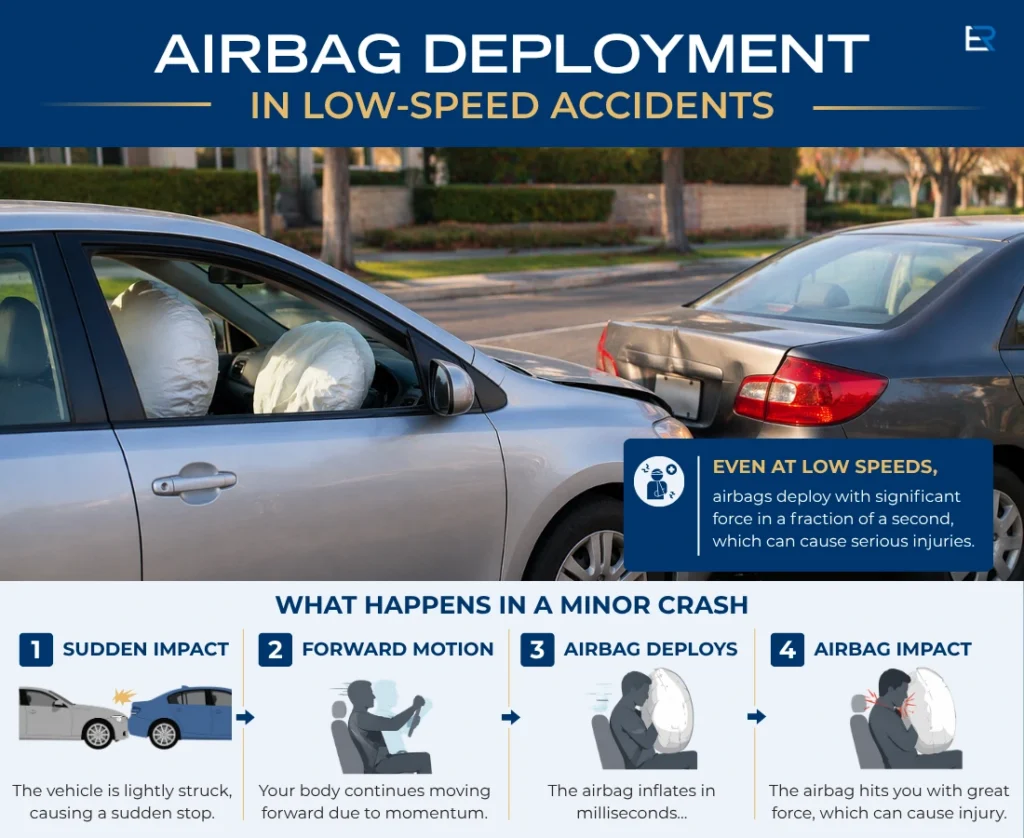
When a vehicle stops suddenly, your body keeps moving forward. That quick motion, especially when combined with airbag deployment, can place stress on your neck, arms, and chest.
It’s also important to understand that your car and your body respond differently in a crash. Modern vehicles are designed to reduce visible damage, but that doesn’t mean your body avoided the force.
Because of this, you may still experience injuries even if:
- The car only has a small dent
- The bumper looks intact
- The accident happened at a low speed
What looks minor on the outside can feel very different physically.
Why Airbags Can Go Off Even in a Small Crash

Airbags are designed to respond quickly to protect you. But they don’t only deploy in high-speed crashes. Instead, airbags rely on sensors that measure how quickly your vehicle slows down.
Because of this, the way an airbag deploys can depend on what’s happening inside the vehicle at the moment of impact, not just the speed of the crash.
In some cases, airbag deployment may vary depending on whether a seatbelt is being used. Seatbelts help control how your body moves during a crash, and the airbag system may respond differently based on that information.
Factors that can trigger airbag deployment include:
- Sudden deceleration
- The angle of impact
- The type of vehicle and airbag system
- Whether a seatbelt is being used
However, not all vehicles are built the same. Different cars use different airbag systems and designs, which means the same type of accident can affect people differently. What feels like a minor crash in one vehicle may have a very different impact in another.
The Hidden Force of an Airbag Deployment
Airbags rely on sensors and a central control system that detect sudden changes in speed and impact. The system uses that information to determine whether and how the airbag deploys
When the airbag inflates, it expands rapidly toward you. If you are close to the steering wheel or dashboard, the impact can feel sudden and intense.
This force may lead to:
- Direct contact with your face or chest
- Pressure on your arms or hands
- A jolt that affects your neck and upper body
Even in a low-speed crash, this rapid deployment can contribute to injury.
Recommended Reading: The Hidden Risk of Airbags for Children After a Car Accident
Injuries That Can Happen Even in Low-Speed Crashes
Not all injuries are obvious right away. Even in a low-speed accident, your body can absorb force in ways that are not immediately noticeable. Airbag deployment can also add to that impact.
Airbag deployment in these situations may lead to:
- Wrist or hand injuries from bracing during impact
- Facial irritation or eye discomfort
- Chest soreness or bruising
- Neck strain or stiffness
At first, these symptoms may seem minor. But what you feel right after a crash doesn’t always reflect the full picture.
Recommended Reading: Chemical Burns from Airbag Deployment; Medical Treatment and Legal Options
Why You May Feel Fine at First—But Symptoms Can Appear Later
After an accident, it’s common to feel okay at first. Many people walk away from a low-speed crash thinking they avoided injury. However, your body may still be reacting to the impact.
Adrenaline can temporarily mask pain. As it wears off, symptoms like stiffness, soreness, or limited movement may begin to appear.
This can lead to situations where:
- Pain develops hours or even days later
- Injuries seem minor at first but worsen over time
- Delays in treatment can make recovery more difficult
Even if the crash seemed minor, paying attention to your body in the days after the accident can make an important difference.
If symptoms start to appear or worsen, you don’t have to figure it out on your own. Speaking with a car accident attorney can help you understand how your injuries may relate to the crash and what steps to consider next.
Why Low-Speed Airbag Injuries Are Often Overlooked
One of the biggest challenges after a low-speed crash is that injuries are often underestimated. If the vehicle damage looks minor, insurance companies may closely review claims involving low-speed accidents.
Some common issues include:
- Injuries being dismissed as “not severe”
- Delays in seeking treatment being used against you
- Lack of visible damage affecting how the claim is viewed
These factors can make it harder to connect your injuries to the accident without proper documentation.
What to Do After a Low-Speed Accident With Airbag Deployment
Taking the right steps early can make a difference in how your situation is handled. Even if the crash seems minor, it may be helpful to take steps to document what happened and how you feel afterward.
Consider the following steps:
- Seek medical attention, even if you feel fine
- Take photos of the airbag deployment and your vehicle
- Keep track of any symptoms that develop over time
- Save any medical records or treatment notes
- Avoid assuming the accident was too minor to matter
These actions can help create a clearer picture of what happened and how it affected you.
Recommended Reading: How Airbag Deployment Affects Your Car’s Value and Insurance Claims
When It May Be Time to Speak With a Personal Injury Attorney
Some situations are not as straightforward as they seem. If your injuries develop later or your claim is questioned, it may help to get guidance.
You may want to speak with an attorney if:
- Your symptoms appear hours or days after the crash
- You are dealing with ongoing pain or treatment
- Insurance companies minimize your injuries
- You are unsure how to move forward
Getting clear information early can help you better understand your options.
Speak With a Car Accident Attorney Today!
A Simple Next Step: Getting Clarity After a Minor Crash
A low-speed accident can still have lasting effects, especially when airbags are involved. What seems minor at first can feel very different in the hours or days that follow.
If you’re dealing with symptoms or uncertainty after a crash, you don’t have to figure it out alone. Speaking with a car accident attorney can help you understand how your injuries may relate to the accident and what to consider next.
We offer free consultations to provide clear information about your situation, so you can move forward with confidence.
