
When you’re in a Los Angeles car accident, it can be shocking—especially if you weren’t at fault.
Many people think that if they didn’t cause the accident on a busy freeway or intersection, they won’t have much to worry about. Unfortunately, even if you’re completely innocent, dealing with the consequences of an accident in Los Angeles is not always easy.
This is because insurance companies don’t always play fair, and the other driver might try to shift the blame to avoid high local liability payouts.
In this article, our experienced Los Angeles car accident lawyers will walk you through the essential steps to take after an accident when you’re not at fault. By following these steps, you can protect your rights, avoid common insurance pitfalls, and get the full financial support you deserve.
Actionable Steps to Take Following a Not-At-Fault Crash in Los Angeles
1. Establish Scene Safety and Gather Hard Evidence
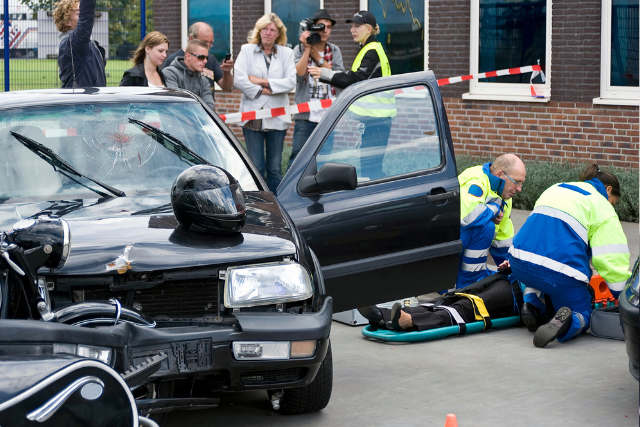
After a car accident, the first moments are crucial, even if you’re not at fault. While the at-fault driver might seem cooperative right now, memories fade, and stories change the moment they speak with their insurance adjuster. To protect your rights, you must assume total control of the narrative right at the scene by initiating an active investigation:
- Prioritize Safety First: Check yourself and your passengers for injuries. If your vehicle is functional and sitting in active traffic on a blind curve of the 101 Hollywood Freeway, the narrow lanes of the 710, or the high-speed lanes of the I-5, safely move it to the shoulder to prevent secondary chain-reaction collisions. Call 911 immediately to dispatch emergency medical services and local law enforcement.
- Secure Official Police Narratives: Ensure responding officers from the Los Angeles Police Department (LAPD) or the California Highway Patrol (CHP) file an official traffic collision report. This document acts as an objective baseline of the accident.
- Go Beyond Basic Visual Proof: Take comprehensive photos and videos of the scene. Document vehicle positioning, structural damage mapping, deployed airbags, skid marks, road conditions, traffic signals, and weather patterns.
- Exchange Information Without Admitting Fault: Collect the other driver’s name, phone number, insurance policy details, license plate number, and vehicle make and model. Never apologize or say “I’m sorry” to the other motorist or the insurance adjuster—these polite statements are routinely twisted into admissions of fault.
Recommended Reading: 2026 Report: How Many Daily Car Crashes Happen in Los Angeles?
2. Seek an Immediate Medical Evaluation (Even if You Feel Okay)

Skipping a medical exam because you “feel fine” at the scene is a dangerous mistake. During a high-impact crash, a massive surge of adrenaline temporarily masks serious physical trauma. Debilitating injuries—like whiplash, concussions, soft-tissue tears, and spinal misalignment—often do not manifest symptoms until hours or days later.
Seeing a doctor within 24 to 72 hours of the crash protects both your health and your legal rights. Whether you are transported by paramedics to a regional trauma center like Cedars-Sinai, LAC+USC Medical Center, or UCLA Santa Monica, or you visit a local urgent care clinic the next morning, establishing an unbroken medical chain of evidence. If you delay treatment, insurance adjusters will claim your injuries were caused by an unrelated event or that you are exaggerating your pain.
When speaking with healthcare providers, describe any discomfort, but avoid exaggerating. For example, instead of saying, “I’m totally fine,” describe specific symptoms, like “I have some neck stiffness.”
Did You Know? Insurance companies track what they call the “Gap in Treatment.” If you wait more than 72 hours after an accident to see a doctor, corporate insurance software automatically flags your claim. Adjusters weaponize this delay to argue that your injuries either didn’t happen in the crash or aren’t actually severe—making immediate clinical documentation your best legal shield.
Recommended Reading: Why Los Angeles Insurance Companies Blame Motorcyclists — And How We Fight Back
3. Secure Independent Witness Testimony Early

Third-party witnesses play a monumental role in validating your version of events. Because they have no personal or financial stake in the outcome of your claim, insurance adjusters and local courts view their accounts as highly credible.
If bystanders, nearby business owners, or other motorists stopped after the crash, approach them calmly and request their contact details. A simple, “Hi, I’m gathering information. Could I get your contact details in case I need help confirming what happened?” usually works well.
Memories fade rapidly, and drivers can easily alter their stories once they speak with their insurance providers. Securing a brief statement or dashcam footage from an eyewitness at the scene locks in the truth before it can be manipulated.
4. Tactics Insurance Companies Use When You’re Not at Fault

Even when the other driver is clearly liable, their insurance carrier is not on your side. Their primary goal is to pay out as little as possible, and adjusters are highly trained to use specific tactics to reduce or deny your claim. To prevent them from shifting the blame or devaluing your case, execute these three protective boundaries immediately:
- Insurance Tactic #1: A Friendly and Understanding “Ally”: An adjuster may call you sounding empathetic, but their true objective is to protect their company’s bottom line, not your recovery. They use this friendly demeanor to lower your guard so they can downplay your injuries, argue that your vehicle damage existed before the accident, or find sneaky ways to suggest that you share some of the blame.
- Insurance Tactic #2: Pressure to Settle Quickly: Insurers frequently pressure victims with a low cash payment right away, hoping you will accept it before you realize the full extent of your physical injuries or actual vehicle repair costs. Always think twice before accepting a first offer. Settling too soon traps you legally, meaning you will be left paying out-of-pocket for unpaid medical bills or car repairs that weren’t fully covered.
- Insurance Tactic #3: Informal Conversations to “Clarify” Details: Adjusters love to casually call to “clarify” parts of the crash, asking seemingly harmless, leading questions when you least expect it. These conversations feel informal, but they are designed to catch you off guard, so you accidentally downplay your physical trauma or car damage. To protect yourself, avoid these off-the-record chats entirely. Keep every single interaction documented, and consider sticking strictly to written communication, which leaves far less room for them to misquote or interpret your words.
Were you injured in a Los Angeles car accident?
Our car accident attorneys offer a free, no-obligation consultation — no fees unless we win your case.
Talk to a car accident lawyer → (213) 985-11205. Document Everything: Building a “Paper Trail” for Your Claim
A successful personal injury claim is driven entirely by documentation. To prevent gaps in your evidence that insurance defense teams could exploit, utilize digital tools to store and organize your files:
- Medical Evidence: Clinical diagnostic reports, ER discharge papers, prescriptions, physical therapy logs, and out-of-pocket receipts.
- Financial Damages: Comprehensive auto body repair estimates, towing invoices, rental car receipts, and proof of lost wages from missed work.
- The Human Impact: A daily pain journal—logged in your smartphone notes app—tracking your physical limitations, pain levels, and how the trauma impacts your daily life and mental health.
- Property & Scene Proof: Comprehensive photos of vehicle damage (taken both at the scene and later at local Los Angeles salvage yards or regional impound lots before insurance defense teams clear the vehicle), pictures of deployed airbags, and copies of the police report.
- Communication Logs: A written timeline of every interaction with insurance adjusters, including dates, times, names, and summaries of what was discussed.
Using Technology to Your Advantage: Use digital note apps, like Google Keep or Evernote, to store photos, receipts, and notes in one secure place. Utilizing apps with reminder features can help you systematically track symptoms and medical appointments over time. This centralized digital “paper trail” keeps your documentation comprehensive, accessible, and ready to present as a well-supported claim.
6. Working with an Attorney: When and Why It’s Critical
Many injury victims assume that if liability is clear-cut, they don’t need a lawyer. In reality, insurance companies are in the business of minimizing payouts, and adjusters are highly skilled at reducing claim values even when their driver is 100% at fault. Without legal guidance, you risk signing away your rights for a fast, lowball settlement that won’t cover your long-term medical bills.
Added Value a Personal Injury Lawyer Brings
Navigating a claim while trying to heal is overwhelming. A dedicated legal team steps in to handle the heavy lifting by:
- Securing Hard Evidence: Subpoenaing traffic camera video, business surveillance footage, and witness statements before they disappear.
- Deploying Forensic Experts: Bringing in accident reconstruction specialists to prove exact speeds and impact angles.
- Accurate Case Valuation: Calculating the true, long-term costs of your medical treatment, physical therapy, and lost future income.
- Managing Communications: Handling all aggressive phone calls and negotiations with the insurance carrier so you can focus entirely on recovery.
Red Flags that Suggest You Need an Attorney Immediately
You should consult a car accident lawyer in Los Angeles immediately if you encounter any of these high-risk situations:
- Your injuries are severe, require ongoing care, or force you to miss work.
- The at-fault driver or their insurer is disputing who caused the crash.
- The insurance carrier is delaying your claim, ignoring your calls, or using high-pressure tactics to push a fast cash settlement.
Take Control of Your Recovery: Contact El Dabe Ritter Trial Lawyers
If you’ve been injured in an accident through no fault of your own, your only job should be focusing on your physical recovery—not fighting a corporate insurance network. Navigating the chaotic claims process alone is incredibly overwhelming, and without a dedicated advocate in your corner, you run a high risk of being left with unpaid medical bills, unfair vehicle repair delays, and ongoing pain.
At El Dabe Ritter Trial Lawyers, we act as your legal shield. We step in immediately to handle the adjusters, preserve vital crash evidence, and fight aggressively for the full compensation you deserve so you can focus entirely on healing.
Don’t leave your physical and financial recovery to chance. Call our experienced Los Angeles car accident attorneys today for a 100% free, confidential consultation, and let us help you take the next step toward true justice.
