
For many Huntington Beach cyclists, one of the biggest appeals of the Santa Ana River Trail is what it leaves behind: regular street traffic. The paved route gives riders a largely separated path toward the coast, whether they are out for a weekend ride, commuting, or putting in longer miles.
But being away from regular street traffic does not eliminate the risk of a crash. The Santa Ana River Trail is a shared environment, and riders may encounter other trail users, changing conditions, and areas where the trail interacts with vehicle traffic.
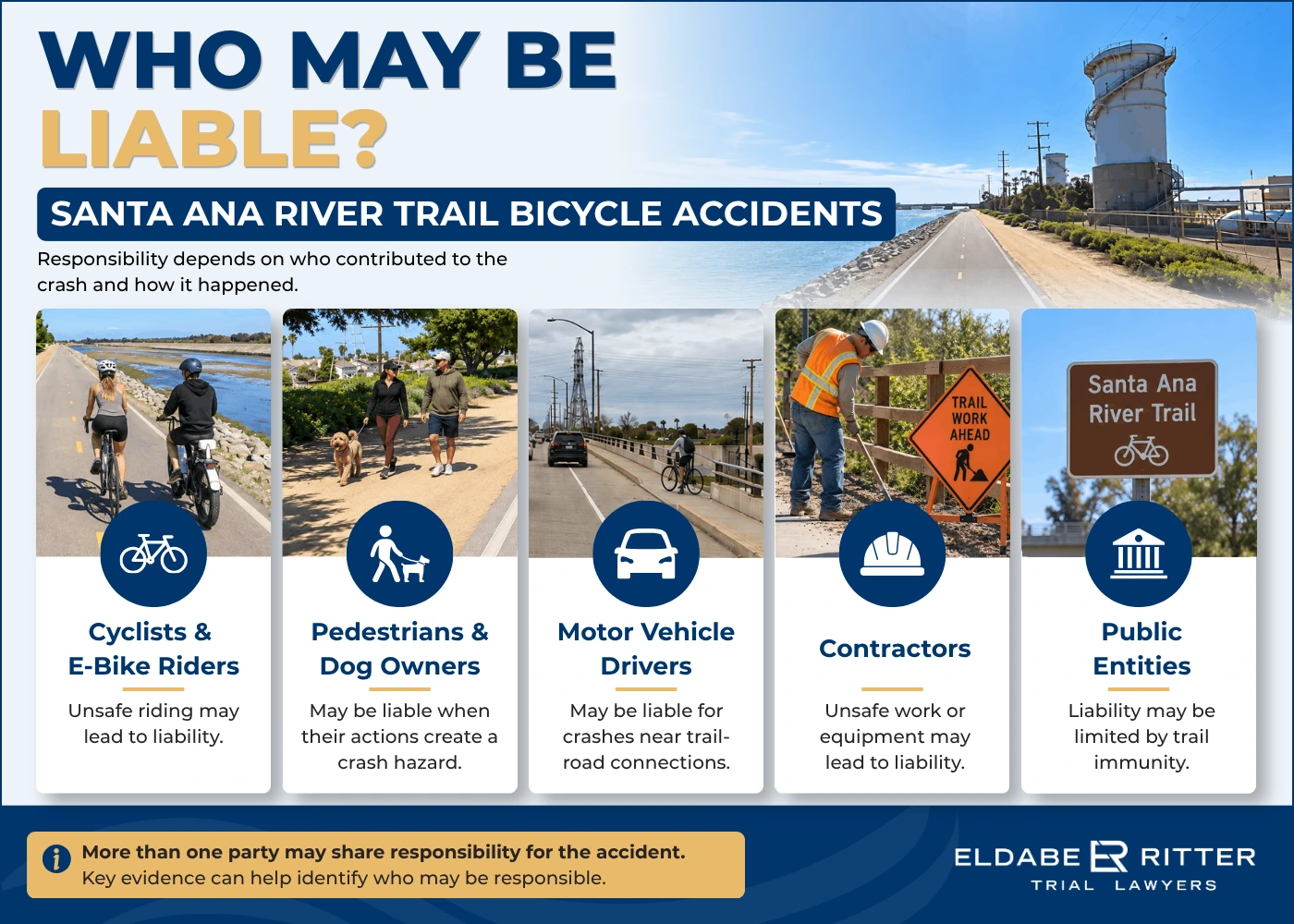
After a Santa Ana River Trail bicycle accident, parties who may be liable include another cyclist or e-bike rider, a driver, a dog owner, a contractor, or, in limited circumstances, a public entity.
A Huntington Beach bicycle accident lawyer can investigate what happened and determine who may be responsible.
Rules to Know When Riding on the Santa Ana River Trail
The Santa Ana River Trail stretches through Orange County to Huntington Beach as part of a larger regional trail system. In Huntington Beach, the trail reaches the coast near Pacific Coast Highway and passes local connection points such as LeBard Park.
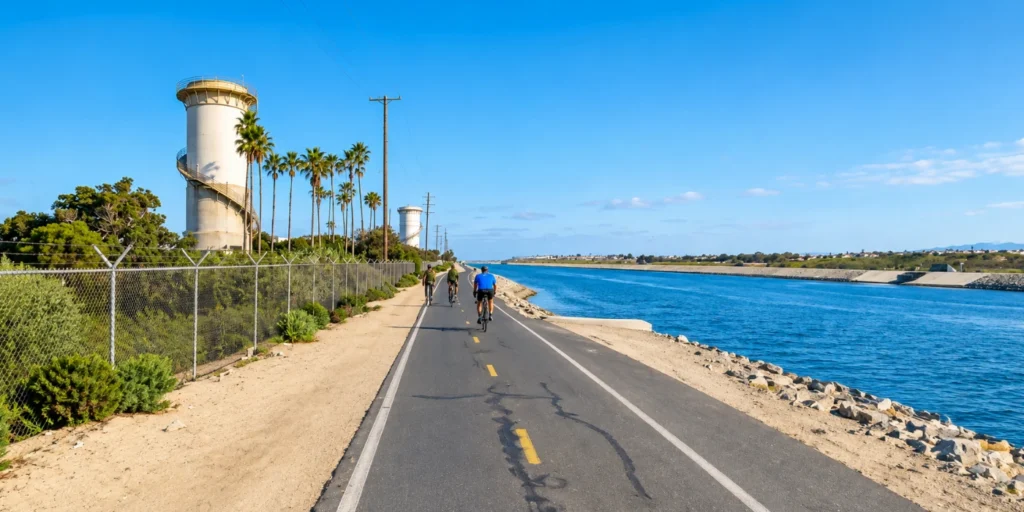
Along the county regional bikeway, several OC Parks rules are important to know:
- 10 mph speed limit: Bicycles are subject to a 10 mph speed limit on county regional bikeways.
- Class 1 and Class 2 e-bikes permitted: Class 1 and Class 2 e-bikes are permitted on designated regional paved, off-road bikeways and remain subject to applicable trail rules and speed limits.
- Dogs must be leashed: Dogs must be physically restrained by a leash no longer than six feet.
These rules do not determine fault by themselves, but whether a trail user followed them may be relevant when evaluating the circumstances of a crash.
Common Causes of Bicycle Accidents on the Santa Ana River Trail
As a multi-use trail, the Santa Ana River Trail brings different types of users and activities together, which means bicycle accidents can happen in several ways.
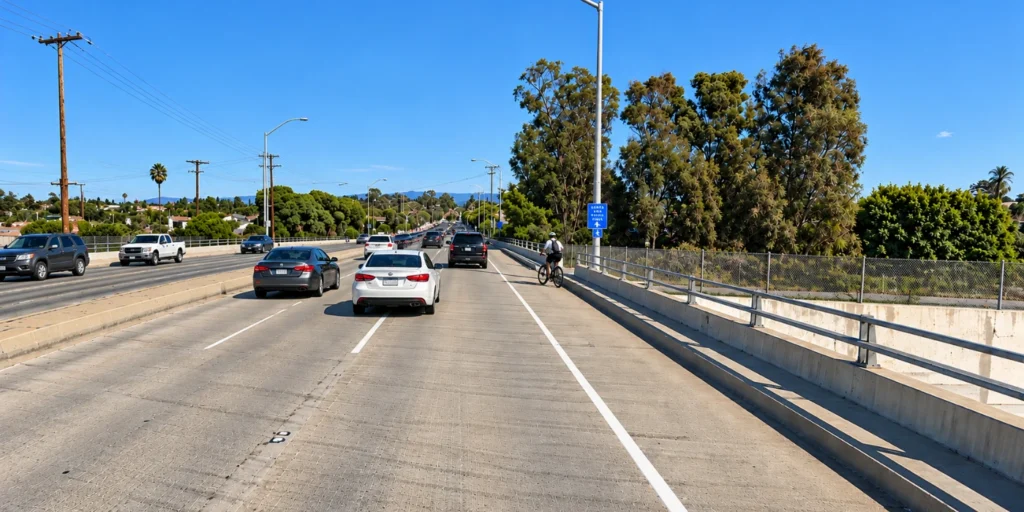
Common causes of a Santa Ana River Trail bicycle accident include:
- Unsafe passing: Passing without enough clearance or cutting back over too soon.
- Excessive speed: Riding too fast can reduce the time available to react to other trail users or changing conditions.
- Pedestrians or dogs entering the path: A person or dog entering the path can force a cyclist to brake or swerve suddenly.
- Collisions near roads and access points: Vehicles and bicycles may cross paths near roadways, parking areas, and trail access points.
- Maintenance and construction hazards: Work vehicles, equipment, or temporary obstructions can create additional hazards.
Understanding what caused an Orange County trail cycling crash is an important first step in determining who may be responsible.
Who Can Be Liable for a Santa Ana River Trail Bicycle Accident?
After a crash on the Santa Ana River Trail, responsibility is not always as simple as pointing to the person closest to the collision. Responsibility can depend on what caused the crash and who contributed to it.
Depending on how the crash occurred, responsible parties may include:
- Another cyclist or e-bike rider: Riding in a way that causes or contributes to a collision.
- A driver near a trail crossing or access point: Failing to yield when required, making an unsafe turn, or otherwise failing to use reasonable care around cyclists.
- A dog owner or other trail user: Creating an unexpected obstruction or hazard.
- A contractor working along the trail: Creating unsafe conditions through work or equipment.
- A public entity: Subject to special liability rules and potential trail immunity.
Under California’s pure comparative fault system, more than one party can share responsibility for a crash. This means an injured cyclist may still recover compensation even if they were partly at fault, although their recovery may be reduced by their percentage of fault.
Where the crash happened also matters. A collision on the Huntington Beach portion of SART may raise different liability issues depending on whether it occurred on the recreational bikeway or where the trail interacts with a roadway or vehicle-access area.
How Trail Immunity Can Affect a Santa Ana River Trail Accident Claim
Under California Government Code § 831.4, public entities may be protected from liability for injuries caused by conditions of qualifying recreational trails, even when the trail is paved.
However, trail immunity does not necessarily apply to every claim simply because the accident occurred on SART. If the crash was caused by another trail user, a motorist, or circumstances separate from the condition of the trail, the liability analysis may be different.
If trail immunity does not apply and a public entity may be responsible, California law generally requires a claim for personal injury or death to be presented to the appropriate public entity within six months after the claim accrues. Additional deadlines then govern when a lawsuit must be filed.
For example, if the public entity provides written notice rejecting the claim in accordance with California law, a lawsuit generally must be filed within six months after that notice. Because claims against public entities involve shorter and more complicated deadlines than ordinary personal injury claims, injured cyclists should act promptly.
What If Your Santa Ana River Trail Crash Involved an E-Bike?
OC Parks permits Class 1 and Class 2 e-bikes on designated regional bikeways that are paved and separated from road traffic. E-bike riders must follow applicable trail rules, including the 10 mph speed limit.
After a crash, identifying the e-bike’s classification can help determine whether that type of e-bike was permitted on the trail. Modifications may also matter if they changed the bike’s legal classification or took it outside the types permitted by OC Parks.
If you were injured by an e-bike that was not permitted on SART, a Huntington Beach bicycle accident lawyer can investigate the bike and whether a trail-rule violation contributed to the crash.
Evidence That Can Help Establish Fault After a SART Bicycle Accident
After a crash on the Santa Ana River Trail, evidence can be critical to showing what happened and who may be responsible.
Depending on where the crash occurred, video footage may not be available, witnesses can leave the area, and conditions at the crash location can change. Acting quickly to preserve evidence can be critical before it disappears or becomes more challenging to obtain.
Useful evidence may include:
- Photos and video: Document the crash scene, bicycle damage, signs, trail conditions, and nearby access points.
- Witness statements: Other cyclists, runners, walkers, or nearby witnesses may provide independent accounts of the collision.
- Exact trail location: Photograph trail entrances, bridges, signs, road connections, and recognizable landmarks.
- E-bike class label: A photo of the manufacturer’s class label can help establish what type of e-bike was involved.
- Digital data: Helmet cameras, GPS devices, cycling computers, and fitness apps may contain speed, route, location, or other ride data.
- Medical records: Records of treatment can help document your injuries, symptoms, and when you sought care after the crash.
What to Do After a Santa Ana River Trail Bicycle Accident
If you are able, taking a few steps after the crash can protect your health and preserve important evidence:
- Get to safety and check for injuries. Move out of the path of other trail users if it is safe to do so. Call 911 immediately if anyone needs emergency help.
- Document the scene and exact location. Photograph the bikes or vehicles, damage, visible injuries, trail conditions, and nearby signs, entrances, crossings, or landmarks.
- Exchange information and talk to witnesses. Get contact information from everyone involved and any witnesses. If a vehicle is involved, collect the driver’s license and insurance information.
- Seek medical care: Get evaluated after the crash, since some injuries may not cause immediate or obvious symptoms.
- Preserve important evidence. Save photos, video, damaged equipment, medical records, repair estimates, and digital ride data. If an e-bike was involved, photograph its class label if possible.
How a Huntington Beach Bicycle Accident Lawyer Can Help
After a serious bike accident on the Santa Ana River Trail, determining who is responsible and what insurance may apply can require further investigation. A Huntington Beach bicycle accident lawyer can gather evidence, identify potentially responsible parties, and pursue available compensation.
An attorney can help:
- Investigate the crash: Gather evidence, interview witnesses, and determine how the accident happened.
- Identify liability and insurance coverage: Determine who may be responsible and what insurance may be available based on how the crash occurred.
- Address government claims: Evaluate whether trail immunity applies and identify applicable claim deadlines.
- Document your losses: Gather evidence of medical expenses, lost income, property damage, and other losses.
- Handle the insurance company: Evaluate settlement offers, negotiate for compensation, and file a lawsuit when appropriate.
A careful investigation can help connect the evidence from the crash to the parties who may be legally responsible.
Common Questions About Santa Ana River Trail Bicycle Accidents
The police didn’t come to the bike path to write a report—do I still have a case?
Not having a police report does not automatically prevent you from pursuing a bicycle accident claim. Photos, video, witness statements, GPS or cycling data, medical records, and other strong evidence may help establish what happened.
Does trail immunity mean I can never bring a claim involving a public entity after a SART crash?
No. Trail immunity can protect public entities from claims involving injuries caused by conditions of qualifying recreational trails, but it does not necessarily apply to every claim involving a public entity. Whether immunity applies can depend on what caused the injury, where the crash occurred, and the basis of the claim against the public entity.
Does not wearing a helmet hurt my accident claim?
It can affect certain parts of a claim, but it does not necessarily mean you were at fault for the crash. Adults riding conventional bicycles or Class 1 or Class 2 e-bikes generally are not required to wear a helmet in California. However, if the accident caused a head injury, not wearing a helmet may be considered when determining the extent of the injury and resulting damages.
What if I was partially at fault for the crash?
You may still be able to recover compensation even if you were partly responsible for the crash. Under California’s pure comparative fault system, your compensation is generally reduced by your percentage of fault. For example, if you were 20% at fault, your recovery would generally be reduced by 20%.
What is the deadline for a Santa Ana River Trail bicycle accident claim?
For many California personal injury lawsuits, the general statute of limitations is two years from the date of injury. Claims against a government entity are different. A claim for personal injury or death generally must first be presented to the appropriate public entity within six months after the claim accrues, and additional deadlines apply after the entity acts on the claim. Other exceptions can also affect the time available to pursue a case, so an injured cyclist should not assume the ordinary two-year deadline applies.
Who responds to accidents on the Santa Ana River Trail?
The responding agency can depend on where along the trail the accident occurs. On or near the Huntington Beach portion of SART, local law enforcement or the Orange County Sheriff’s Department may be involved depending on the location and circumstances. For a serious injury or emergency, call 911 and provide the nearest trail entrance, road, bridge, or landmark so dispatchers can send the appropriate responders.
Injured in a Santa Ana River Trail Bicycle Accident?
You may have started your ride expecting miles of open trail and a break from regular street traffic. A bicycle crash can suddenly replace that ride with injuries, a damaged bike, and questions about who should be responsible.
If you were injured in a Santa Ana River Trail bicycle accident near Huntington Beach, El Dabe Ritter Trial Lawyers can preserve important evidence, identify potentially responsible parties, and pursue compensation on your behalf. Our Huntington Beach bicycle accident lawyers can handle the claim while you focus on your recovery.
Contact us 24/7 for a free consultation. There are no upfront fees, and you pay no attorney’s fee unless we recover compensation for you.
