
After a car accident, it’s common to receive two repair estimates that don’t look anything alike. In an insurance estimate vs body shop estimate comparison, the insurance estimate often comes in much lower than what a body shop finds during a hands-on inspection.
That gap can feel frustrating or unfair, especially when you’re already dealing with injuries and stress. The truth is, this happens every day in California. Once you understand why the numbers don’t match, the process becomes easier to navigate.
Why Insurance and Body Shop Estimates Don’t Match
Insurance companies and body shops look at the same damaged vehicle from very different angles. The insurance and body shop each have different responsibilities, use different tools, and focus on different goals. Because of that, estimates and body shop numbers often widely differ.
This gap between the insurer isn’t usually a sign of wrongdoing. More often, it means the vehicle hasn’t been fully inspected by an auto body professional or collision center yet.
How Insurance Adjusters Estimate Vehicle Damage
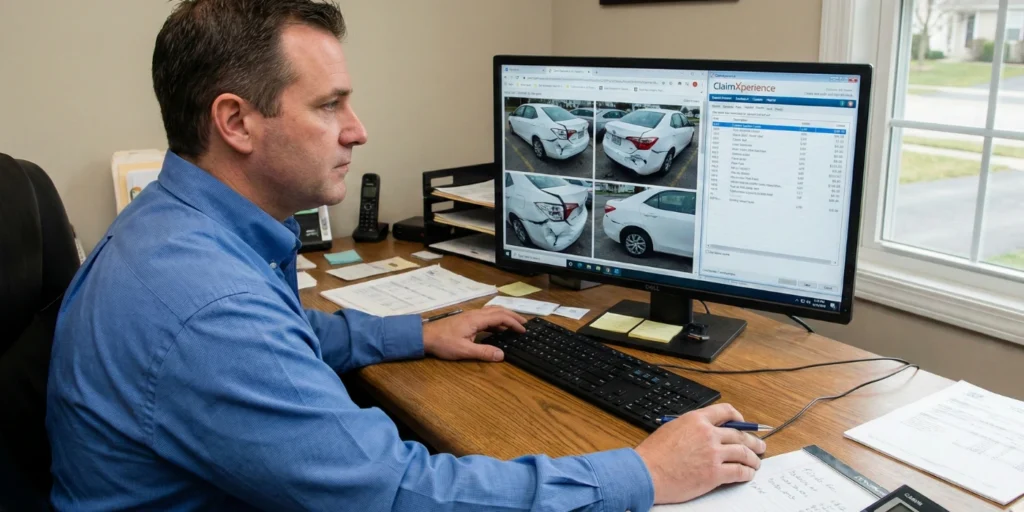
When an insurance estimate arrives, it often comes quickly, and that’s because it usually does. Today, most insurance estimates are written from photos or short videos submitted through an app or link, without the adjuster ever seeing the car in person.
Drive-through or in-person inspections still exist, but they’re far less common and usually involve only a brief visual review, not a full inspection.
Because of how these estimates are created, they are typically:
- Based only on visible damage
- Written without taking the car apart
- Missing issues behind panels or underneath the vehicle
- Created early to move the claim forward and manage costs
With this limited information, an insurance estimate vs. body shop estimate comparison often shows a lower number at first. That doesn’t make the estimate wrong; it means it’s a preliminary estimate and likely to change once repairs begin.
Recommended Reading: 5 Key Questions to Ask the Insurance Company After a Car Crash in California
How Body Shops Assess Vehicle Damage After an Accident
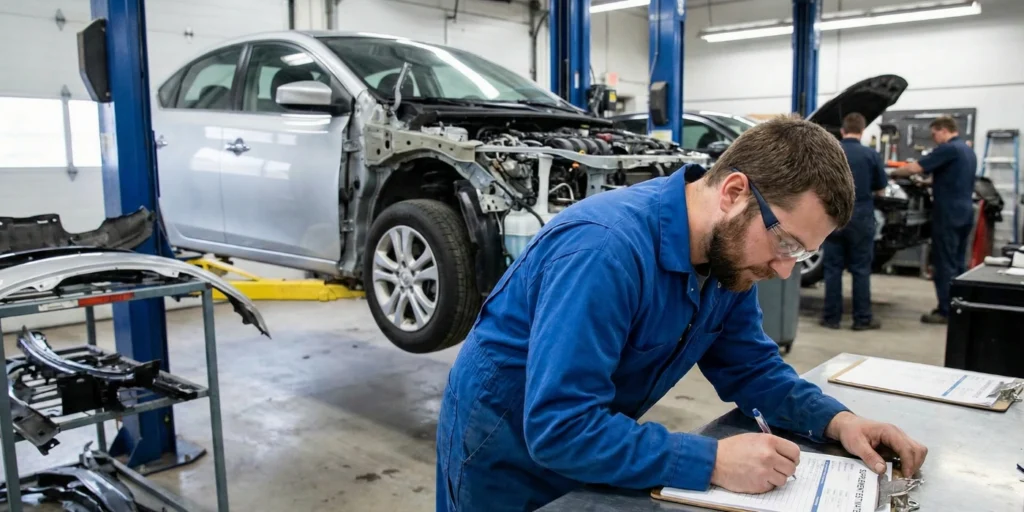
Body shops take a very different approach because their responsibility goes beyond writing an estimate. Their job is to repair the vehicle properly and make sure it is safe to drive again. That requires a closer, hands-on look at the damage.
Body shop estimates are usually:
- Based on in-person inspections: Written by the actual technicians performing the repairs.
- More detailed and accurate: Updated continuously as hidden issues are uncovered.
For instance, established local centers like Network Auto Body or GP Collision in Downtown Los Angeles don’t just guess from a photo app. They conduct rigorous physical inspections, often disassembling panels to uncover structural, frame, or safety-system damage that field adjusters regularly overlook.
Why Photo Estimates Don’t Tell the Full Story of Vehicle Damage
After a crash, getting an insurance estimate quickly can feel like progress. But speed often comes at a cost. In Los Angeles, where claim volume is high, photo-based estimates are common, and they often overlook damage that isn’t visible from the outside.
Photos often fail to show:
- Frame or structural damage
- Suspension and alignment issues
- Cracks beneath panels
- Damage to safety sensors
As a result, many Los Angeles drivers receive estimates that are incomplete from the start.
Were you injured in a Los Angeles car accident?
Our car accident attorneys offer a free, no-obligation consultation — no fees unless we win your case.
Talk to a car accident lawyer → (213) 985-1120A Side-by-Side Look at Insurance and Body Shop Estimates
Seeing the difference side by side helps explain what’s really happening. Below is a simplified example of how one accident can produce two very different estimates.
| Repair Item | Insurance Estimate | Body Shop Estimate |
|---|---|---|
| Bumper | Replace only | Replace + sensor recalibration |
| Fender | Repair | Replace due to hidden bend |
| Suspension | Not included | Control arm + alignment |
| Labor | Minimal | Expanded after tear-down |
| Total | $4,200 | $8,900 |
The higher estimate reflects damage found later, not inflated prices.
Why Did My Body Shop Submit a Supplement?
A supplement is an updated repair request sent to the insurance company after more damage is discovered. It reflects issues that couldn’t be confirmed during the first inspection, especially damage hidden beneath the surface.
Supplements are common because:
- Many vehicle components aren’t visible from the outside
- Cars often need to be partially taken apart to assess damage
- Modern vehicles include sensors and safety systems that require closer inspection
While supplements can slow the repair process, they are a normal and expected part of collision repairs, particularly after more serious accidents.
Do I Have to Pay the Difference in Repair Estimates?
This is often the first question people ask when they see two different estimates. The idea of paying thousands of dollars out of pocket can feel overwhelming. In most cases, that’s not how the process works.
Here’s what usually occurs:
- Repairs start based on the initial insurance-approved estimate
- Hidden damage is discovered during repairs
- The body shop submits a supplement
- The insurance company reviews the added cost
The biggest problem isn’t surprise bills, it’s delay. Supplement reviews can slow repairs, especially in busy areas like Los Angeles.
Recommended Reading: How Does The Car Insurance Claim Process Work?
Why This Matters Beyond Repair Costs
Vehicle damage often tells an important story about how serious a crash was. More extensive damage can support injury claims by showing the force involved in the collision.
Incomplete estimates can:
- Delay repairs and transportation
- Slow your recovery
- Lead to disputes with insurance companies
- Undervalue injury-related claims
This is where legal guidance can make a real difference.
Recommended Reading: What Does “Total Loss” Mean in a Car Accident?
How to Stay in Control During the Repair Process
You don’t have to navigate this process on your own. Taking a few simple steps early can help protect your interests and reduce unnecessary stress.
- Don’t panic over the first insurance estimate, it’s often preliminary
- Ask whether the estimate was photo-based or written without an in-person inspection
- Expect changes once repairs begin, especially after disassembly
- Keep copies of all estimates, supplements, and repair documents
Keep copies of all estimates, supplements, and repair documents
If You Have Questions, You Have Options

Low insurance estimates, repair delays, and supplements are more than just car problems; they can affect your recovery, your finances, and your injury claim. Understanding how these issues connect puts you in a stronger position when dealing with insurance companies after a crash.
At El Dabe Ritter Trial Lawyers, our California car accident lawyers handle serious injury and complex car accident cases. With over 60 years of combined experience, we fight to secure meaningful compensation for injured clients across California, including Los Angeles and Huntington Beach.
