
Injured in A Commercial Truck Wreck? Find Out How We Can Help You
Los Angeles Commercial Truck Accident Lawyer
Serving crash victims across Los Angeles County
Trusted LA commercial trucking accident attorneys for 25+ years. One call can start your path to recovery.
- No Win, No Fee
- Access to Your Attorney
- Over $500M Recovered

- Direct Access to Your Attorney
- Bilingual Support: English & Spanish
- Trial-Tested Lawyers at Your Side
- Excellence in Every Interaction
Los Angeles, CA 90015
Home » Los Angeles Truck Accident Lawyer » Commercial Truck Accident Lawyer
Most people picture 18-wheelers when they hear “truck accident.” But in Los Angeles, commercial trucks are everywhere.
Delivery drivers rushing through neighborhoods. Garbage trucks backing up on narrow streets. Box trucks double-parked on busy corridors. Dump trucks hauling debris through construction zones.
These vehicles are just as dangerous as semi-trucks. And the companies behind them fight just as hard when something goes wrong.
Our Los Angeles truck accident attorneys at El Dabe Ritter Trial Lawyers, have secured millions against a commercial truck operators in Los Angeles. We know how these companies defend cases. We know how their insurers minimize claims. And we know what it takes to hold them accountable.
If a commercial vehicle injured you or someone you love, here is what you need to know.
On This Page
What Is a Commercial Truck And Why Does It Matter?
Not every large vehicle is the same in the eyes of the law. The type of truck involved affects who is responsible, what insurance applies, and how your case is built.
On this page, we are talking about:
- Delivery trucks — Amazon, UPS, FedEx, and other last-mile vehicles
- Garbage and sanitation trucks — city-operated and privately contracted
- Box trucks — used by movers, freight carriers, and rental companies
- Dump trucks — common at construction sites and excavation jobs
- Cement mixers and concrete trucks
- Utility vehicles — gas company trucks, electrical crews, and public works fleets
- Municipal and government fleet vehicles
Semi-trucks and 18-wheelers are a different category. They are governed mainly by federal rules and are covered on a separate page. Commercial trucks involve different laws, different liable parties, and different insurance — which changes how we build your case.
Types of Commercial Truck Accidents We Handle in Los Angeles
Delivery Truck Accidents
E-commerce has put more delivery vehicles on LA streets than ever before.
Amazon, UPS, USPS, FedEx, and gig-economy couriers are under constant time pressure. That pressure leads to dangerous decisions — running lights, ignoring blind spots, speeding through neighborhoods.
Here is something important: many delivery companies call their drivers “independent contractors.” They do this to avoid being responsible when their drivers cause accidents. Think of it like a company saying, “That wasn’t our employee so, it’s not our problem.”
California law does not let them off the hook that easily. We challenge that defense directly. In most cases, the facts show the company controlled enough of the driver’s work to be fully responsible.
Garbage Truck and Sanitation Vehicle Accidents
Garbage trucks are among the most dangerous vehicles on residential streets.
They reverse frequently, have large blind spots and operate in neighborhoods where pedestrians, cyclists, and children are present.
Our firm secured a $2.2 million verdict in a Los Angeles garbage truck accident case. That result came after the operator’s insurer refused to offer a fair amount. We took it to trial and won.
One critical thing to know: if the garbage truck was operated by the City of Los Angeles or another government agency, you have only six months to file a claim, not two years. Missing that deadline can permanently end your case. We explain this further below.
Box Truck Accidents
Box trucks (often used by movers, delivery companies, and freight carriers) are often underinsured.
That means the insurance policy may not fully cover your injuries. But underinsurance does NOT mean no recovery.
We dig deeper. We look at every party involved: the driver, the company that hired them, whoever maintained the vehicle, and any business that loaded the cargo. When one policy is not enough, we pursue every available source.
Dump Truck and Construction Vehicle Accidents
Construction projects across Los Angeles create constant heavy vehicle traffic.
Unsecured loads are a serious hazard. Debris falling from a dump truck at freeway speed can cause catastrophic crashes with no warning.
These cases often involve multiple defendants: the truck driver, the construction company, the site operator, and sometimes the general contractor. We identify all of them from the start.
Utility and Municipal Vehicle Accidents
Accidents with city-owned vehicles or utility company trucks — like those operated by SoCalGas, Southern California Edison, or the DWP — require a completely different legal approach.
Government entities have special protections built into the law. You have to follow specific steps and meet specific deadlines or you lose your right to sue. Our attorneys handle these procedural requirements from day one.
Who Is Responsible for a Commercial Truck Accident in California?
This is where commercial truck cases get complicated and where experience matters most.
The driver who hit you is rarely the only responsible party. In fact, they are often the least important defendant in your case. The company behind them is where real accountability lies.
The Truck Driver
The driver’s own actions are the starting point. For example, distracted driving, running a red light, backing up without checking are negligent actions.
But in our experience, unsafe driver behavior is usually a symptom of a bigger problem. A company pushing unrealistic schedules. A fleet that skips maintenance. A training program that barely exists.
We pursue both the driver and the system that put them on the road.
The Employer Vicarious Liability
Here is a key legal concept: vicarious liability.
In plain terms, it means this: when an employee causes harm while doing their job, the employer is also responsible. You do not just sue the driver. You sue the company.
Think of it like this: if a grocery store employee drops something on you while stocking shelves, you do not just sue the employee. You sue the store. The same principle applies here.
Trucking and delivery companies know this. So their first move is usually to argue their driver was an “independent contractor” and not an employee. That way, they claim they are not on the hook.
California has some of the strongest worker protection laws in the country. Under AB5, companies have to prove a driver truly was an independent contractor. The burden is on them, not on you. We challenge that defense regularly and we win.
The Company for Negligent Hiring and Training
Even if a company disputes being vicariously liable, they can still be directly responsible for their own mistakes.
Did they:
- Hire a driver with a history of accidents?
- Skip background checks?
- Fail to train properly?
- Ignore complaints about unsafe behavior?
If yes, that is negligence by the company itself. It is separate from what the driver did, and it adds another layer of accountability.
Cargo Loaders and Third-Party Contractors
Sometimes the crash is caused not by the driver but by what the truck was carrying.
Improperly loaded cargo can shift during a turn. An overloaded truck can roll over. Debris falling from an unsecured load can cause a chain-reaction crash.
When that happens, the company that loaded the truck shares responsibility. They often carry separate insurance, which means more available compensation for you.
Vehicle Manufacturers and Product Defects
What if the brakes failed? What if a tire blew out because of a defect?
In those cases, the manufacturer of the vehicle or the defective part can be held liable. This is called a products liability claim. It runs alongside the other claims in your case, not instead of.
Commercial Truck Insurance in California: What You Need to Know
Commercial trucks are required to carry far more insurance than regular cars. Minimum coverage ranges from $300,000 to $5,000,000 depending on the vehicle type and what it carries.
That sounds like a lot. But insurance companies do not hand that money over willingly.
In fact, a single commercial truck accident can trigger multiple insurance policies at once:
- The driver’s personal auto policy
- The company’s primary commercial liability policy
- An excess or umbrella policy above the primary limit
- Cargo insurance, if the load caused the crash
- A separate policy held by a maintenance or loading contractor
Each policy has its own insurance company. Each one has its own adjuster. Each adjuster’s job is to pay as little as possible.
When multiple insurers are involved, they sometimes argue with each other about who owes what.
That benefits them. Not you.
It creates delays. It creates confusion. And it gives them time to build their defense while you are still recovering.
Getting an attorney involved early, before you speak to any insurer, is not just helpful. In serious cases involving multiple defendants, it is essential.
Why These Cases Often Involve Multiple Defendants
Here is a real-world example of how quickly the defendant list can grow.
Say a delivery driver runs a red light and hits your car. You might have claims against:
- The driver for running the light
- The delivery company for pressuring drivers to meet impossible schedules
- A staffing agency if the driver came through a third-party labor contractor
- A vehicle maintenance company if bad brakes contributed to the crash
- The cargo company if overloading affected the driver’s control
- A parts manufacturer if a specific component failed
California uses what is called a pure comparative fault system. Think of it like splitting a bill. Each defendant pays based on their percentage of fault.
For example: if a company is found 40% at fault and your total damages are $1 million, that company owes $400,000. The driver might owe another portion. The cargo company another.
Every defendant we identify adds to what you can recover. Every one missed is money left behind, permanently.
That is why thorough investigation from day one is not optional. It is the difference between a partial recovery and a full one.
Learn more about how truck accident investigations work.
Where Commercial Truck Accidents Happen Most in Los Angeles
Commercial truck traffic in Los Angeles follows predictable patterns. So do the accidents.
The I-710 corridor between the Port of Long Beach and downtown LA carries some of the heaviest commercial truck volume in the country. Accidents here often involve multiple vehicles and multiple liable parties.
Downtown LA delivery corridors around the Fashion District, the Arts District, and near the Produce Market see constant delivery truck traffic alongside heavy pedestrian and cyclist activity. Double-parking, blind-spot reversals, and distracted drivers are frequent contributing factors.
Active construction zones on the 405, I-10, and SR-60 create constant dump truck and heavy equipment traffic. Sudden lane changes and falling debris are ongoing hazards.
Residential neighborhoods throughout the San Fernando Valley, South LA, and the Eastside see daily garbage truck routes. These routes account for a disproportionate share of pedestrian fatalities in the city.
If your accident happened in Long Beach, particularly involving port-related commercial traffic, our attorneys handle those cases as well.
The Evidence We Go After And Why Timing Matters
In commercial truck cases, the most important evidence is almost always controlled by the defendant.
They know what they have. And they know how long they are required to keep it.
We move immediately. From the moment we are retained, we issue legal letters demanding that all evidence be preserved. This prevents the other side from claiming records were “routinely deleted.”
Employment and Contractor Classification Records
Is the driver an employee or a contractor? The answer determines whether the company is on the hook.
We subpoena employment agreements, dispatch logs, payment records, and operational documents. We look at who controlled the driver’s schedule, provided the vehicle, and set the route. In most cases, those facts tell a very different story than what the company’s contract says.
Fleet Telematics and Dashcam Footage
Most commercial fleet vehicles record data constantly. GPS location. Speed. Hard braking. In many cases dashcam video of the crash itself.
This is the first thing our legal team tries to protect, otherwise it is at risk of being overwritten.
Maintenance and Inspection Records
Commercial vehicles must be regularly inspected and maintained. When companies skip that maintenance — especially on brakes, tires, and steering — it shows up in the records.
We obtain full maintenance histories and compare them against legal requirements. Gaps in those records are often evidence of negligence.
Driver Qualification and Safety Records
Did the company check this driver’s history before putting them on the road? Did they know about prior accidents or violations?
We obtain motor vehicle reports, training files, prior accident histories, and internal safety complaints. If the company ignored red flags, that becomes direct evidence against them — separate from what the driver did on the day of your crash.
All Insurance Policies
Before we negotiate anything, we identify every insurance policy that could apply to your case.
Settling without knowing the full picture is one of the most common ways victims leave significant money behind. We do not negotiate until we know exactly what is available.
Hit by a Government Vehicle? You Have Less Time Than You Think.
If the commercial truck that hit you was operated by the City of Los Angeles, LA County, a transit agency, or any other government entity, the standard rules do not apply.
Under the California Government Claims Act, you must file an administrative claim with the responsible government agency within six months of the accident.
Missing this deadline ends your case definitively.
Government cases also involve additional legal defenses, different insurance structures, and procedural requirements that simply do not exist in private commercial truck cases.
If you were hit by a city garbage truck, a county utility vehicle, an MTA bus, or any government-operated commercial vehicle, contact our office right away. Every day counts.
How Much Is a Commercial Truck Accident Case Worth?
There is no standard number. But there are reasons why commercial truck cases are consistently worth more than regular car accident claims.
First, the injuries tend to be more severe. A 40,000-pound garbage truck hits very differently than a 3,500-pound sedan.
Second, commercial defendants carry more insurance. That means more is available to compensate you.
Third, employer liability adds a corporate defendant to the case. Companies have deeper resources than individual drivers.
Compensation can include:
- Medical expenses: emergency care, surgery, rehabilitation, and future treatment
- Lost income: wages missed during your recovery
- Loss of earning capacity: if your injuries affect your ability to work long-term
- Pain and suffering: physical pain and emotional distress caused by the accident
- Loss of enjoyment of life: hobbies, activities, and relationships affected by your injuries
- Property damage: your vehicle and personal belongings
- Wrongful death damages: if a family member was killed
Our firm’s $2.2 million garbage truck verdict came after the operator’s insurer refused to offer a fair number. We took the case to trial. We won.
We also recovered $5.55 million in a wrongful death case involving a commercial truck. Every case is different. But these results show what happens when a firm is willing to fight and prepared to go to trial.
Most large firms settle fast and move on to the next case. We are not that firm.
The Attorneys Who Will Handle Your Case
At El Dabe Ritter Trial Lawyers, your commercial vehicle accident case is handled by the attorneys whose names are on the door. Your case is not passed off to a junior associate or a case manager you have never met.
That is not how most large firms operate. At those corporate law firms, you might meet a partner once and never hear from them again. We work differently.

Jonathan M. Ritter, Esq. — Founding Partner
Jonathan M. Ritter, Esq. is a founding partner and trial attorney. He focuses on complex and catastrophic cases involving commercial vehicles, semi-trucks, big rigs, and wrongful death. Jonathan is a member of the American Board of Trial Advocates (ABOTA) and the Academy of Truck Accident Attorneys (ATAA). Very few California attorneys hold both distinctions. ABOTA requires a significant number of jury trials to qualify. ATAA requires specialized expertise in truck accident litigation specifically. When you hire Jonathan Ritter, you get a trial lawyer who knows commercial truck cases inside out.
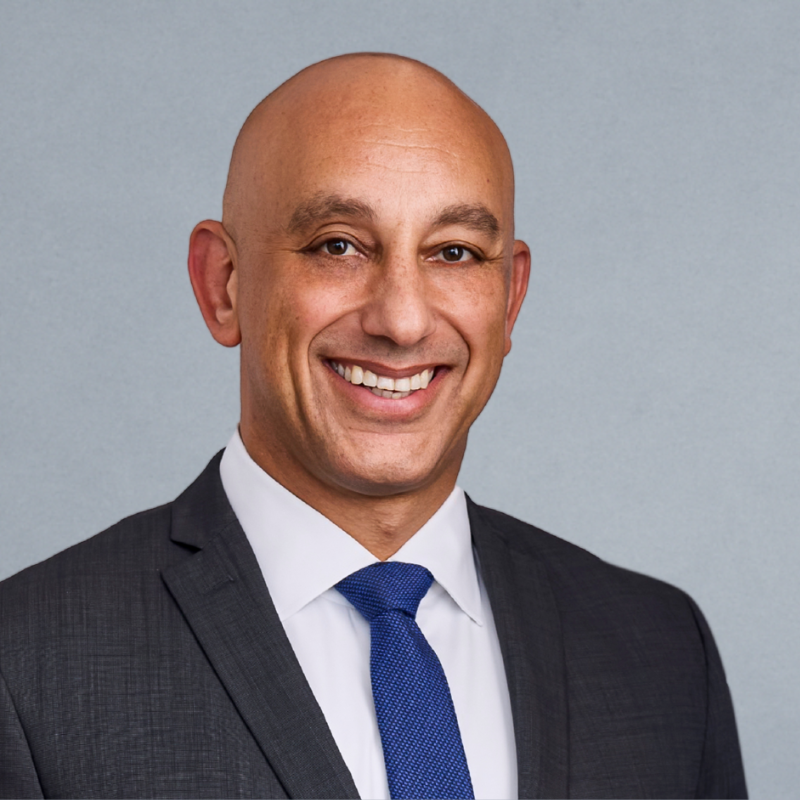
Sherif Edmond El Dabe, Esq. — Founding Partner
Sherif Edmond El Dabe, Esq. is a founding partner and trial attorney. He focuses on complex injury litigation involving commercial trucks, catastrophic orthopedic and brain injuries, and insurance bad faith. He earned his law degree from Loyola Law School and clerked for a U.S. Federal Magistrate Judge. Before representing injured victims, he worked at an insurance defense firm — meaning he spent years on the other side of these cases. He knows exactly how insurance companies build their defense. He uses that knowledge against them. Sherif (aka "Ed") El Dabe has helped clients across California recover more than $500 million in verdicts and settlements.
Commercial Truck Accident Frequently Asked Questions
Is a delivery truck accident legally different from a semi-truck accident?
Yes, in important ways. Semi-trucks are governed mainly by federal FMCSA regulations. Delivery trucks involve different rules, including California’s AB5 employment law, different minimum insurance requirements, and different liability structures. An attorney with experience in both knows how to approach each type of case differently.
Can I sue the company if their driver hit me?
Yes, in most cases. When an employee causes an accident while doing their job, the employer is responsible too. This is called vicarious liability. Even when companies try to claim the driver was an independent contractor — to avoid that responsibility — California law makes it very difficult for them to succeed with that argument. We challenge it regularly.
What if the driver was classified as an independent contractor?
That classification is often exactly what the company wants you to accept. Under California’s AB5 law, companies bear the burden of proving a driver truly qualifies as an independent contractor. We look at the actual working relationship, this can include who controlled the schedule, provided the vehicle, set the route, etc. And in most cases, the facts support employee status regardless of what the paperwork says.
How long do I have to file a claim if a city truck hit me?
Only six months. Under the California Government Claims Act, accidents involving government-operated vehicles require you to file an administrative claim within six months of the accident — not the standard two years. Missing this deadline ends your case permanently. Contact us immediately if a city, county, or government vehicle was involved.
What is the MCS-90 endorsement?
It is a federal insurance requirement for commercial motor carriers. In simple terms, it closes a loophole that insurers sometimes try to use to avoid paying claims. It requires the insurer to pay a judgment even if the carrier claims the vehicle was being used in a way the policy does not normally cover. Whether it applies depends on the specific vehicle and carrier. However, we review this as part of every case assessment.
What if I was partly at fault for the accident?
You can still recover compensation. California uses a pure comparative fault system. That means your recovery is reduced by your percentage of fault. For example, if you were 20% at fault and your total damages are $500,000, you recover $400,000. Insurance companies routinely try to inflate your share of fault to reduce their payment. We push back on that with evidence.
Talk to a Los Angeles Commercial Truck Accident Lawyer
The moment a commercial truck accident happens, the other side starts building their defense.
Their insurance adjusters are trained to settle fast; before you know what your case is really worth. Their lawyers are experienced at making their clients look less responsible than they are.
We match that urgency. From the first call, we move to preserve evidence, identify every responsible party, and make clear to the other side that this case will not be settled for less than our client is entitled to.
Call us now. The sooner we get involved, the more we can do.
El Dabe Ritter Trial Lawyers offers a free, confidential case review with no obligation. We work on a contingency fee basis. You owe us nothing unless we recover for you.
Call (213) 985-1120
Available 24 Hours a Day, 7 Days a Week
1150 S Olive St. #1300, Los Angeles, CA 90015

- No Win, No Fee
- Access to Your Attorney
- Over $500M Recovered
Top-Reviewed Law Firm