
It’s a Friday evening in July. Pacific Coast Highway through downtown Huntington Beach is bumper to bumper. A family is crossing from the beach parking lot on the west side of PCH to grab food on the east side. A rideshare driver has pulled halfway into the right lane to drop someone off near the pier. Three cars back, someone is trying to make a left turn across oncoming traffic through a gap in the median. None of these things are unusual on PCH. All of them can turn catastrophic in a second.
Pacific Coast Highway is one of the most iconic roads in California and one of the most dangerous stretches in Orange County. In Huntington Beach specifically, where coastal tourism, residential traffic, cyclists, and pedestrians converge on a two-direction highway with no physical barrier between lanes, the conditions for serious crashes exist every single day. The data backs this up.
If you’ve been injured in a car accident on PCH in Huntington Beach, understanding your legal options and what caused the crash is essential for protecting your rights and pursuing compensation.
How Dangerous Is Pacific Coast Highway in Huntington Beach? The Numbers
Huntington Beach recorded 780 car crashes in 2023, resulting in 13 deaths and 1,097 injuries, according to crash data from the SWITRS GIS Map by SafeTREC at UC Berkeley.
That works out to more than two crashes per day across the city, and a significant number of them happen on or near Pacific Coast Highway, which runs the full length of the city’s coastline.
Orange County as a whole sees more than 17,000 injury or fatal crashes annually, according to the California Office of Traffic Safety, with PCH corridors consistently ranking among the most dangerous segments due to high speeds, heavy tourist traffic, and inadequate infrastructure for cyclists and pedestrians.
Huntington Beach alone recorded 332 bicycle crashes in a recent multi-year period, many of them on or adjacent to PCH. These numbers reflect how heavily the road is used by vulnerable road users who share space with fast-moving vehicles.
The road’s danger isn’t abstract. In April 2026, a woman was killed on PCH just south of Warner Avenue in Huntington Beach when a BMW rear-ended her Kia Soul and pushed it off the road into the wetlands. The driver was arrested on suspicion of DUI. It was the kind of crash that PCH sees regularly, a combination of speed, impairment, and a road that offers little margin for error.
Why PCH Is So Dangerous in Huntington Beach
Road Design and Speed Differential
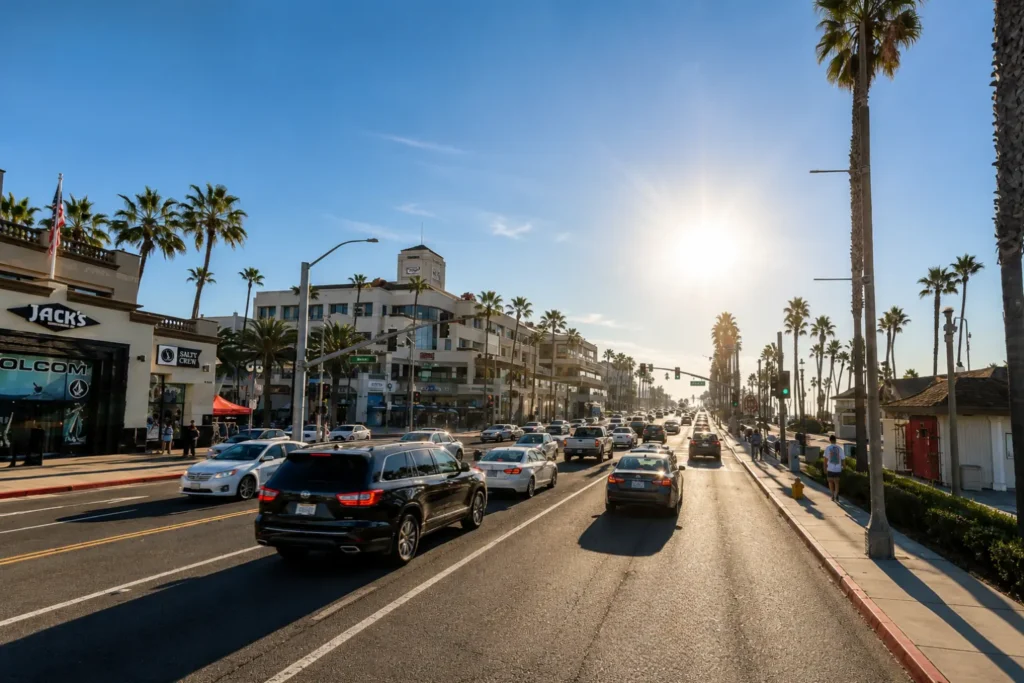
PCH is California State Route 1 — a highway. It moves at 45 to 55 mph through stretches of Huntington Beach that also serve as a neighborhood street, a beach access road, and a commercial corridor. Most of the HB stretch has no physical barrier between the northbound and southbound lanes, so a left-turn conflict with oncoming traffic is just part of driving on this road. Median breaks and uncontrolled access points create constant crossing conflicts that would not exist on a properly separated highway.
Tourist and Seasonal Traffic
Huntington Beach draws millions of visitors each year, particularly in summer. Drivers unfamiliar with the road where the access points are, how traffic flows near the pier, and where cyclists are likely to be mix with locals who know the road well but still face the same physical hazards. The result is an unpredictable traffic environment where reaction times that would be adequate on a familiar road fall short.
Cyclists and Pedestrians
Huntington Beach is designed around beach access, which means people cross PCH constantly, from parking lots to the sand, from restaurants to the beach path, from downtown to the water. The stretch near the pier and Main Street is among the most pedestrian-heavy, yet drivers often move at speeds inconsistent with the volume of foot traffic — leading to frequent pedestrian accidents in Huntington Beach crosswalks. In 2023, 51 pedestrian crashes in Huntington Beach resulted in 3 deaths and 53 injuries. A meaningful portion of both categories involve roads in and around PCH.
Nighttime and DUI Risk
Pacific Coast Highway is a known drunk driving corridor on weekends and throughout summer. The concentration of restaurants and bars near downtown Huntington Beach means late-night traffic includes a higher proportion of impaired drivers than on most roads in OC. Nearly 300 DUI-related crashes occur annually across Orange County, and PCH after dark sees a disproportionate share. The April 2026 wetlands crash that killed a woman is consistent with a pattern the road has seen for years — a high-speed rear-end at night, suspected impairment, a victim who had no warning and no way out.
Most Dangerous Stretches and Intersections on PCH in Huntington Beach
Not every section of Pacific Coast Highway through HB carries the same risk. Certain intersections and segments generate crashes consistently, year after year.
PCH at Beach Boulevard is one of the highest-volume intersections on the road. Beach Boulevard carries traffic from the 405 directly to the coast, and the merge and crossing conflicts at this point are significant.
PCH at Main Street, near the pier and downtown, is where pedestrian and cyclist exposure is highest. The concentrated foot traffic from restaurants, beach access, and the pier creates constant conflict with vehicles turning or crossing.
PCH at Goldenwest Street sees frequent left-turn crashes due to the speed differential between through traffic and turning vehicles.
PCH near Warner Avenue, where the wetlands border the road on the east side, has been the site of multiple fatal crashes — the road narrows in perception here, and when vehicles leave the travel lane, the margin is a wetland, not a shoulder.
For a full breakdown of the most dangerous intersections across Huntington Beach using 2023 crash data, see our Most Dangerous Collision Intersections in Huntington Beach analysis.
Common Types of Car Accidents on Pacific Coast Highway
Rear-End Collisions
Stop-and-go traffic near the pier, on Main Street, and at Beach Boulevard creates conditions for rear-end crashes throughout the day. A driver following too closely who doesn’t react in time to a slowing vehicle — or a rideshare driver stopping abruptly to pick up a passenger — produces the kind of crash that looks minor but frequently causes whiplash, disc injuries, and concussions that don’t fully present until days later.
Left-Turn T-Bones
The median breaks and access points along PCH force drivers to cross oncoming lanes to turn left. When a driver misjudges the gap or oncoming traffic is moving faster than expected, the result is a T-bone collision at significant speed. These crashes tend to produce serious injuries because the vehicle is struck broadside with little structural protection.
Pedestrian and Cyclist Strikes
Beach access crossings throughout the HB stretch — particularly near the pier, the beach path, and the parking lots between 1st and 10th Streets — put pedestrians and cyclists directly in conflict with PCH traffic. Cyclists are especially vulnerable near transitions between bike paths and road crossings, where drivers may not expect them in the travel lane.
DUI Crashes
PCH after dark on weekends is a different road. Impaired drivers moving at highway speeds, with reduced reaction times, on a road with no median barrier cause some of OC’s most severe crashes. If you were injured in a nighttime crash on PCH, impairment is worth investigating even if it wasn’t immediately obvious at the scene.
Who Is at Fault in a PCH Car Accident?
California follows a pure comparative fault system, which means fault can be divided between multiple parties, and even a victim who bears some percentage of fault can still recover compensation, reduced by their share of responsibility.
On PCH, fault disputes are common. A driver who rear-ended you may argue you slowed suddenly without warning. A left-turning driver may claim they had a clear gap created by another vehicle. A driver who struck a cyclist may argue the cyclist was outside the designated lane. These disputes are exactly where having an attorney before you speak to the other driver’s insurer matters most.
Most crashes on Pacific Coast Hwy, in Huntington Beach, are investigated by the California Highway Patrol, not the Huntington Beach Police Department, because PCH is a state highway.
This puts it under CHP jurisdiction in most circumstances. The CHP report, including the investigating officer’s assessment of the primary collision factors, is critical to fault determination and serves as a central document in any insurance claim or lawsuit.
Getting a copy of that report early and having an attorney review it before responding to the insurer protects your position from being weakened by a recorded statement.
What to Do After a Car Accident on PCH in Huntington Beach
1. Call 911
CHP typically responds to crashes on PCH rather than HBPD. Ask the dispatcher to confirm which agency is responding and get the incident number — you’ll need it to obtain the official crash report.
2. Document the Scene
PCH has specific hazards worth photographing beyond vehicle damage: sight line obstructions at the access point where the crash occurred, road markings, the presence or absence of signage, skid marks, and the position of your vehicle relative to the median break or intersection. This context can matter significantly in a fault dispute.
3. Seek Medical Attention Immediately
Rear-end crashes and T-bone collisions on PCH frequently cause injuries — whiplash, head trauma, soft tissue damage — that don’t fully present at the scene. Adrenaline masks pain. Getting evaluated the same day protects both your health and your ability to connect those injuries to the crash in your claim.
4. Do Not Give a Recorded Statement
The other driver’s insurer will likely contact you quickly. You are not required to give a recorded statement, and doing so before you’ve spoken with an attorney can lock you into an account that the insurer will later use to minimize your claim.
5. Contact a Huntington Beach Car Accident Lawyer
PCH crash claims involve CHP reports, OC courts, and insurance adjusters familiar with this corridor. Having a local attorney who knows the road and the process changes the dynamic of that negotiation from the start.
How El Dabe Ritter Helps PCH Accident Victims
Our Huntington Beach office is on Pacific Coast Highway. We are not a Los Angeles firm taking OC cases remotely. We are here, on this road, representing clients injured on it.
El Dabe Ritter Trial Lawyers handle rear-end crashes, left-turn collisions, pedestrian and cyclist strikes, DUI crashes, and uninsured motorist claims arising from accidents on PCH throughout Huntington Beach and Orange County. We regularly deal with CHP reports, the OC Superior Court, and the insurance adjusters assigned to this corridor.
There are no upfront fees. We work on contingency. If we don’t win your case, you pay nothing. If you suffered serious injuries on Pacific Coast Highway in Huntington Beach, a conversation with our team is free and carries no obligation.
Talk to a Huntington Beach car accident lawyer →
Frequently Asked Questions
Who is at fault in a PCH car accident in Huntington Beach?
Fault in a PCH crash depends on the specific circumstances: speed, right-of-way, driver behavior, and road conditions all factor in. California’s pure comparative fault system means more than one party can share responsibility. The CHP investigates most PCH crashes and documents primary collision factors in their report, which typically forms the foundation of the fault analysis. An attorney can review that report and advise you on your position before you respond to any insurance inquiry.
Should I call CHP or HBPD after a crash on Pacific Coast Highway?
Call 911 and let dispatch route the response. PCH is a state highway, so the California Highway Patrol typically responds to crashes on the road itself rather than the Huntington Beach Police Department. HBPD may respond to crashes at intersections. Either way, a peace officer should file a report. Ask the responding officer for the report number before they leave the scene.
How long do I have to file a car accident claim after a PCH crash in California?
In California, the general statute of limitations for personal injury claims is two years from the date of the accident. If a government entity is involved — for example, a crash related to road design or signage maintained by Caltrans — separate government claims deadlines may apply and are significantly shorter. Do not wait to speak with an attorney if a government entity may be a factor in your crash.
Injured in a car accident in Huntington Beach?
Our Huntington Beach car accident attorneys offer a free consultation — no fees unless we win.
Talk to a Huntington Beach car accident lawyer → OR CALL 714-536-9366